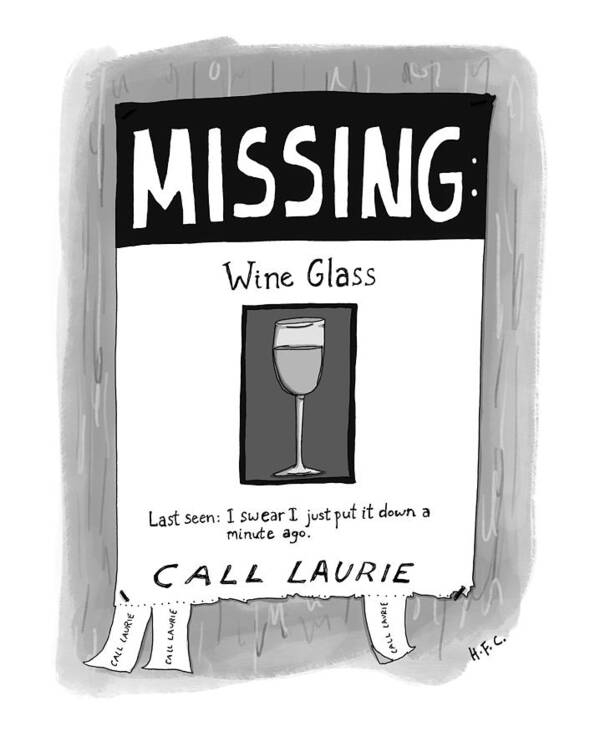
Thursday, November 15, 2012

Erica Baum's "Poetry"


Yikes -- this was already a short week to begin with because of Veteran's Day (no SWIC this past Monday) but I am having one of those "Holy crap, it's already Thursday sort of weeks."  I have been pretty busy this week dealing with Annotated Bibliographies from my ENG 102 sections which take time to walk through carefully and help the students think about their research questions and how they are approaching their eventual research essays.  That means that I am spending little time on my own research and writing.  Which makes me feel stressed.  And tired.

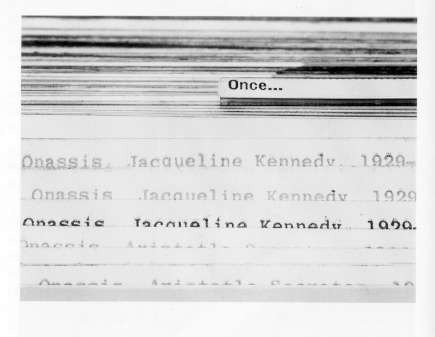
However, I am working hard at focusing on the "good stuff" that happens in every ordinary day!  For example, we are "reading" the most amazing poetry right now in my (free!) online MOOC, Modern and Contemporary Poetry (or ModPo for those in the know!).  One of the poets in ModPo this week is Erica Baum, a photographer "slash" poet (or maybe it is poet "slash" photographer?).  Anyway, below is an image of one my favorite pieces by her so far:
As you can tell, Baum takes a look at "found language" -- why create a poem when there is so much language already out there?  This take on poetry, of course, leaves a person more time to focus on interpretation (versus taking all that time to actually "create" a poem).  At first, I wasn't sure what to think -- this isn't the sort of post-modern "stuff" that  I am usually attracted to.  But, the more I looked at the above picture (and listened in on the video discussion of the poem), the more I found myself drawn to it.  As you can tell from the image I hope, Baum took photographs of old card catalogs (a type of object that I suspect many younger people have no knowledge of!).  She then took some photos with the juxtapositioning of language and words.  Here, there are subject cards in the card catalog for Jacqueline "Jackie" Kennedy Onassis -- of course, our former first lady and wife to JFK.  I was a bit perplexed at first by the subject card "Once" sticking out.  What in the heck is that card doing there?  I suspect a librarian at some point decided to insert a subject card with "Once" for any number of reasons.  But what immediately comes to mind for me is "Once Upon a Time ...," evoking a fairy tale, a story of Camelot ... which then makes perfect sense when juxtapositioned next to Jacqueline Kennedy's name.  Weren't  JFK and Jacqueline Kennedy seen as the "stars" of their own Camelot, our American version of royalty?  The fact that the cards are repeated with her name -- something about that evokes movement for me (though I am not sure what to do with this observation!).

Anyway -- you get the point!  Who knew such a seemingly "simple" poem could do something so powerful for me?  Erica Baum is also known for her dogearing "portraits" like the one below:
Like the card catalog poem, there is something interesting about the words and sentences that are created when you do this type of paper folding.  The video in the online class alluded to something I hadn't thought of before.  If you look at any novel or book that I have read, you will often notice the dog eared pages -- even if I undo them for some reason, you can still see them!  You can still see where I highlighted a page for whatever reason.  Isn't that interesting how this "trail" might be saying something about you and what you value as a person and a thinker?

So in this busy and crazy week that I am experiencing, I am trying to find "gems" like this to stay sane.  Poetry is starting to be a daily reminder that language is, indeed, powerful and pivotal to how I see and think about the world.  I'd like to think that wrapping my head around poetry (and images) is helping me to think a little differently -- and maybe helping me write a better dissertation!

PS:  This last Erica Baum image I am leaving you with is also fantastic -- make sure you take a careful look at the words noting the "stuff" in this particular card drawer!  Fantastic!

Sunday, November 11, 2012

Analysis Chapter -- Here I Come!


I think I am making progress!  Well, at least I am down to the final two chapters of the dissertation!  As you can see from the video below, this morning I first had to do a quick refresher as to what I need to accomplish here in the Analysis Chapter (Chapter 5 for me).  This past week, I finally completed the Results Chapter (Chapter 4) and now I need to take that next big step -- why is what I found important?


So as the above video suggests, this important chapter is perhaps one of the key parts of my overall discussion -- Why should someone care about what I discovered?  What is the significance of my findings?  According to Dr. Cheryl Lentz (the prof in the video above), I need to accomplish four tasks in this chapter: (1) Interpret the raw data that I discuss in chapter four, (2) return to the original purpose of my study as a whole, (3) integrate and bring these chapters together, and (4) offer recommendations for further study (though I think I may be completing this fourth task in my conclusion instead).  In essence, I need to "complete the story" of my research.

And so that is what I will be doing for the next two weeks -- my goal is to have this chapter completed by Thanksgiving, leaving me only one chapter to complete (the conclusion!).  What scares me the most about writing up my analysis is that I am not 100% that what I have to say is all that important anyway.  I have snippets of notes all over the place (completely disorganized!) and what I need to do is to try and bring all those notes together into one cohesive discussion.  On some level, I think I have been afraid to do this 100% because it is here, in this chapter, that I feel like the validity (or lack thereof) of my study will FINALLY see the light of day!  What if I don't have anything interesting to report after spending years of my life dedicated to this study?

So I guess I need to start with small steps.  What follows is one thought about what to include in my analysis chapter:

I know that I discovered on interesting "thing" with my data coding -- students who expressed rhetorical "linguistic moves" that I would consider "lower level" also sometimes expressed rhetorical "linguistic moves" that were (a bit) higher-level.  So, in other words, it is difficult to make a blanket statement about the quality of critical thinking in a student's written response because -- if you looked closely enough -- you could see something interesting that was being accomplished in the "small moves" that a student was making.

For example, Aaron in the Day Class wrote a statement that I categorized as "Treading Writing,"  In one sentence of a paragraph he submitted: "No single person holds any more God given value than another."  As I mention in my methodology, this sort of sentence refers to an easy or simple explanation for the resolution of difficult racial issues.  In other words, Aaron is expressing the idea that "God" is the "one" solution" to racial difficulties and if we all just got on board with this kind of thinking then racial issues would simply dissolve and not be a societal concern anymore.  However, just before the above sentence from Aaron, he wrote, "I recognize that there is undoubtedly a problem with racism in the U.S."  Aaron's use of the word "undoubtedly" is interesting -- he recognizes on some level that unquestionably the idea of race is something that is still wrestled with and unresolved in our country.  Thus, I categorized this sentence as "Acknowledging Writing," a sentence that reflects the knowledge that complexities are inherent in a concept like "race" -- indeed, there is a step towards critical thinking in terms of what Aaron was trying to write.  What is so interesting, of course, is that Aaron starts to wrestle with the critical idea of this touchy topic -- race -- and then backs down two sentences later by claiming that a belief in God (or any other spiritual entity) would solve this "problem" and lead to a better society.

So it's kind of interesting, right?  (I hope this is the sort of thing that I am supposed to be talking about in the analysis!).  I feel like this is where that online Modern Poetry class is helping me -- what I am doing with the data is what I am being asked to do with poetry -- slow down and interpret!  Look at the terms and words -- how, in fact, are the students talking about race?

Wednesday, November 7, 2012

Part 2: Last Essay for ModPo


Well, I had about 20 minutes between classes today and so I used my time productively!  If you see the entry below, I started the assignment for my Modern Poetry class on Mesostic poetry -- and below you will see how I analyzed the poem I "made" (honest!  read below first before reading this entry!)  I talk about the original version of the Mona Van Duyn poem that I used and then I introduce the "new version" that I made by putting her poem into this link:

Moves 
YOu,
INklings 
A

OurselVes, 
ThAn
IN

Or Deal
Stumble Upon
BY 
MoNa


Though I was a bit nervous about approaching this assignment (I am not a creative writer at all!), something Al said in one of the video discussions stuck with me in terms of this week's poetry -- the pressure of poetic creation is off (whew!) but then the focus becomes more about interpretation (yeah!).  We are being asked to shift our attention and think about what we "hear" when the structure is "exploded" and then pieced back together.  I don't pretend to get "this" 100% but here are my thoughts:

This rearrangement starts with a verb "moves" which is then immediately followed by "you."  Saying "Moves You" is more insistent than a more traditional description, "You are moved."  The brilliant word which follows, "Inklings," refers to a slight suggestion or indication -- so is the "problem" alluded to in the original version now an "inking" and not this onerous, huge "problem"?  Is the emphasis now more on feeling (the harder thing to get at) than the actual problem itself (whatever that might be which, of course, becomes a moot point in the end anyway).

I love, love, love how the last line ends -- "stumble upon by Mona."  This version is in the present tense and it alludes to Mona "stumbling upon" the words/ ideas/ conversation instead of actually creating the poem itself (and the use of the first name indicates a closeness, a relationship).  I think of "stumbling" in terms of "pebbles" and not huge cosmic boulders (or the "planets" as mentioned in the original version of the poem).  So, again, this re-version of the poem gets at the "inside" of these hard to talk about feelings and emotions (the use of "ourselves" and the "V" being in the middle where our attention is also encourages this interpretation).
So what say you?  Climb into this interpretation with me!

New Term of the Week: Mesostic Poetry

The energy surge I have had since the weekend is still sticking around!  Yeah!  I think a combination of things happened in the same couple of days -- (1) Getting sick of sitting around and whining about a dissertation that isn't getting done when I sit around and whine and worry, (2) focusing on some fabulous poetry that is making my head think in different ways, thus resulting in a new enthusiasm for the written word and language, (3) being more conscious about some of the activities I use in my writing courses creates some interesting writing and thinking on behalf of both the students and me, (4) re-connecting with a huge assortment of fabulous friends who energize me with their enthusiasm, passion and encouragement, and (5) getting back to exercising and yoga-ing on a regular basis.


So there you go.  I try to tackle each day for what it is and make sure I do a little of each of the five activities above (and I try not to beat myself up when it doesn't happen).  This plan doesn't always work out, of course.  Today, for example, I teach a late afternoon class as well as my day courses so there won't be time to hit the gym or go to yoga since I won't be home until late (though, I suppose I COULD go to the gym in our building if I really wanted to.  But -- I consider Wednesday my day off from working out!).  I already have a plan for what I need to work on today in terms of the dissertation -- try to finish editing/ playing with the results chapter and continue with the notes I have already made for the conclusion (the one chapter I still need to work on from scratch).  I have already listened to one video from my online Modern Poetry class -- a conversation on John Cage's "Writing Through Howl" and I even started the last essay assignment for the class.  For the last essay, we are supposed to create a Mesostic Poem using a computer program online.


So have I lost you yet?  (and believe me, I didn't know what this was a week ago myself!).  A Mesostic Poem is similiar to an Acrostic Poem, you know the one's that write a word vertically like "POEM" and then each line starts with the first letter of each of these words.  Here is a quick example (and please keep in mind that I am making this up as a I go along!):

Party 
On
English
Master writers!

The one I just made above is called an Acrostic Poem and the only difference between this an a Mesostic Poem is that the letters don't line up on the left.  The "spine letters" are in the middle of the word(s) -- see the picture above?  We were asked to use this great web site: http://www.euph0r1a.net/mesostomatic/  and then do two things:  Determine the spine word and then give a URL for a poem (either from the course or another one that we just happen to like) and have the computer program create a Mesostic Poem.  Then, we are supposed to show what we came up with after we used the program and then interpret what we think about "what happened" between the original poem and the created Mesostic.

Since I am not deeply immersed in reading Mona Van Duyn (see the blog entry below about my purchase of one her books at the recent St Louis Poetry Center Auction), I selected her poem "Earth Tremors Felt in Missouri" since I found this poem online and would then easily be able to put the URL in the program generator.  If you are interested in the actual poem, here it is:

The quake last night was nothing personal, 
you told me this morning. I think one always wonders, 
unless, of course, something is visible: tremors 
that take us, private and willy-nilly, are usual.

But the earth said last night that what I feel, 
you feel; what secretly moves you, moves me. 
One small, sensuous catastrophe 
makes inklings letters, spelled in a worldly tremble.

The earth, with others on it, turns in its course 
as we turn toward each other, less than ourselves, gross, 
mindless, more than we were. Pebbles, we swell 
to planets, nearing the universal roll, 
in our conceit even comprehending the sun, 
whose bright ordeal leaves cool men woebegone.

And once I put the poem in the program noted above, this is what I came up with:

Moves 
YOu,
INklings 
A

OurselVes, 
ThAn
IN

Or Deal
Stumble Upon
BY 
MoNa

If a line has an extra word or so (like "Stumble Upon"), then these are called "Wing Words" (according to Cage).  Something Al Frieis (the prof behind this fabulous free online course!) said in one of the video discussions recently was that poetry like this takes the pressure off creation (I mean, all I did was put a poem in an online program!) and then puts that pressure onto interpretation.  So, though I was scared about this type of "crazy language poetry," I think I get it now!  Well, not "I get it all -- ask me anything" but more like, "OK, interpretation!  I can do that!"  So this is what I have to figure out by this weekend (when this "essay discussion" is due):  What does this new take on Van Duyn's poem MEAN?  Any takers to help me out?

PS:  Here is my quick interpretation of the original poem from Van Duyn: The "quake last night," which the speaker refers to in line one, may involve a personal problem, or else a problem in the attitude of the listener toward the speaker -- we don't know the exact circumstances. But a problem was expressed and to the speaker it has assumed the magnitude of "earth tremors felt in Missouri."  I don't think Missouri here has to mean Missouri exactly (just a location).  Personal circumstances become earth shaking and what might seem to be no more than a "pebble" to the outside world has HUGE importance (in fact, including "the sun). 

Sunday, November 4, 2012

Lovely Finds from the St Louis Poetry Center!


On Friday night, Jim and joined our great friend Mary Ruth Donnelly -- a fabulous poet, mind you, and you might want to click here to buy her fabulous book of poetry (and, for the record, she is one of the most stylish people I know!) -- at the St Louis Poetry Center Trivia Night at the Regional Arts Commission on Delmar (in U City).  I think this was our third year in a row doing this event with our team and this year we came in 3rd place!  (Yeah!  Our table had a blast!  And, as usual, I met some fabulous people including the fascinating and super friendly Virginia Slachman who will be signing her upcoming memoir at Left Bank Books later this month!).

Another high point to the evening is the Silent Auction of Rare Books.  Every year I pick up something but this year I picked up "somethings."  As you can see from the picture below, I ended up bidding on -- and winning! -- three books!  Since I have been taking the (free) Modern Poetry course on coursera.org, I am trying to wrap my head around poetry in ways I have never done before!  These three books will help me get started!


The first (the one on the top) is a novel (OK, so not poetry but hang on!) by poet Constance Urdang (1922-1966).  Urdang used to teach at Washington University and I was interested in the novel when I picked it up at the event for a couple of reasons:  I didn't know who she was AND the first few lines of the novel drew me in (I noticed after I purchased the book that she had signed this copy! It's a first edition from 1969).  Natural History is, according to the Saturday Review, "Not a novel. A series of images in the form of prose episodes. Their meaning, if any, to emerge when at the end one can look back to try and make out the 'significant patterns. . . ."' Muriel Haynes in that same Saturday Review article likens Natural History to a journal, or "thought book," in which literally, though not in other regards, "nothing happens; a succession of everyday people, men and women, old and young, dead and alive, move in and out, serving as metaphors for ways-of-being-in-the-world."  I might have to wait until the dissertation is closer to being done before I can pick this up, but it sounds interesting!

The book in the middle of the three in the above picture is called Poets of Today and highlights poems from Harry Duncan, Murray Noss, and May Swenson.  I mostly put a bid on the book because of the poems from Swenson.  I once read that just a few months before her death, she wrote: "The best poetry has its roots in the subconscious to a great degree. Youth, naivety, reliance on instinct more than learning and method, a sense of freedom and play, even trust in randomness, is necessary to the making of a poem."  This book was published in 1954 and has that beautiful old book smell!

The book at the bottom of the pile in the picture above I bought on a whim --  a collection from Mona Van Duyn. When I was browsing the auction items, I picked it up and fell in love with one of the poems, "Lives of the Poets."  It was the cheapest of the three that I purchased (this is a first edition from 1982).  Again, this is a poet I didn't know but .... it turns out that Van Duyn has won almost every award a poet can get and was one of our poet laureates for our country.  I am amazed that I didn't know who she was! (Imagine how many great writers I still have to read in this world!  Tons!)  I have already read several of the pieces in this slender edition and feel so fortunate that I have now encountered her!  (and for the record, she also taught at Washington University and became one of the St Louis circle of famous writers who called Wash U their academic home!).

I don't know if it was because of this wonderful evening of "talking poetry" but I feel more invigorated this weekend and I am trying hard to get off my ass and get things done.  Yesterday, Jim and I went to Johnson Shut-Ins (a State Park in southern Missouri) and I went to the gym for an hour after we returned home (even though I didn't really want to if truth be told!).  Today, I have cleaned my home office, worked on my dissertation, went to a 90 minute yoga class, and blogged!  And there are still a few hours in the day to go!  Who knew that poetry was such a wonderful form of motivation/ gas to the engine!
Wednesday, October 31, 2012

Music!

One way of remaining calm when one is stressed -- listening to music that makes me happy!  (alright, that is probably a lesson that a lot of folks already know!  I guess I have a thick head!)  So if you don't happen to know the music from The Laya Project, check out the short excerpt below (the entire album is absolutely beautiful and engaging -- check out the DVD if you have time!)


And here is one more from the same album!

Last Day of October

.... and here it is the last day of October!  How in the heck did that happen?

This means that I have roughly about 6-7 weeks to finish up the major writing in my dissertation.  A possible feat but one that keeps getting harder in the face of work problems and personal issues.  One thing I need to work (we will call this goal #1) on is keeping the work "problems" at work, not to let them to continue to linger in my head far into the night.  In particular, I am not doing a very good job this semester at connecting with students who have a bone to pick with me (maybe they don't like certain policies or don't follow directions but then complain, or .... well, you get the picture).  I used to think I was pretty good at being patient.  Yeah, not so much anymore.  As much as I would like to blame the accumulating number being added to my age, I think sometimes I am just grouchy because, well, I am just grouchy.  It probably doesn't help that I am stressed pretty much all the time about the dissertation.  And  my research is directly connected to what (and how) I teach.  So it's hard for me to go home and separate "grad school Dianna" and "teacher Dianna." I know so many super good teachers (and I am not putting myself in this group, mind you!) who dedicate themselves 110% (or more!) to the fabulous art of teaching but then are blindsided by students who express only apathy and boredom.  Perhaps as a part of our job in teaching writing, we rhetoric/ composition people need to work on way(s) of encouraging our students to better see writing and rhetoric as important "concerns," perhaps even more important than Facebook and Jersey Shore.

So goal number one:  Try to keep work stuff at work because it's going to drive you crazy if you don't do this!

What about goal number two?  Try to remember that revising (and playing with text) is fun.  I know that sometimes I am so overwhelmed by all the things I don't know that even something that I usually love to do -- revising and playing with language -- becomes a hard task indeed.  And truth be told, all of a sudden a marathon of Jersey Shore sounds like a good idea!  (I think this is called "evading responsibilities!  And no fears -- I haven't gone that route quite yet!)

If I could just manage these first two goals for the next six weeks or so, I imagine that will release enough energy for me to focus completely on what I need to do in order to get this darn dissertation done.  Of course, I also need to strangle that voice that keeps saying that I am stupid and can't complete this project.  In many ways, I think that voice has always been there (why o why is validation still so darn important to me?) but she needs to shut the fuck up.  Seriously.  Walk the plank babe!

So perhaps this is, indeed, the third goal -- pay attention to the small beauties in my life.  I have the best cheerleader a person could ask for in Jim (who loves me no matter how grouchy and mean I can sometimes be!). I have some fabulous students and co-workers.  Witty friends in real life and Facebook make me laugh and value human connections!  I still love going to the gym and doing yoga (the few times a week I can fit it in!).  I believe in the research I am trying to write up.  And tomorrow starts the post-Halloween chocolate sales.  Life is good.

Book Review: "Murder Book: A Graphic Memoir of a True Crime Obsession"

  When I was in graduate school -- pursuing an MA and later a PhD in English -- I often “hid” the true crime books that I tended to read whe...